

Real vs Fake Rudraksha: How to Check Before You Buy
Natural lines, honest listings and item-specific reports matter more than the “water test”. A practical checklist for buying genuine Rudraksha online.
In this article
In short: you cannot confirm that a Rudraksha is genuine from a photo or a water test alone. Ask the seller for the origin, the inspection details and the report for that exact item.
Because Rudraksha is a natural seed, every bead is slightly different. That is also why imitation beads (moulded resin, wood or plastic) are common. Here is how to look at a listing like a careful buyer.
1. Look for Natural, Irregular Lines
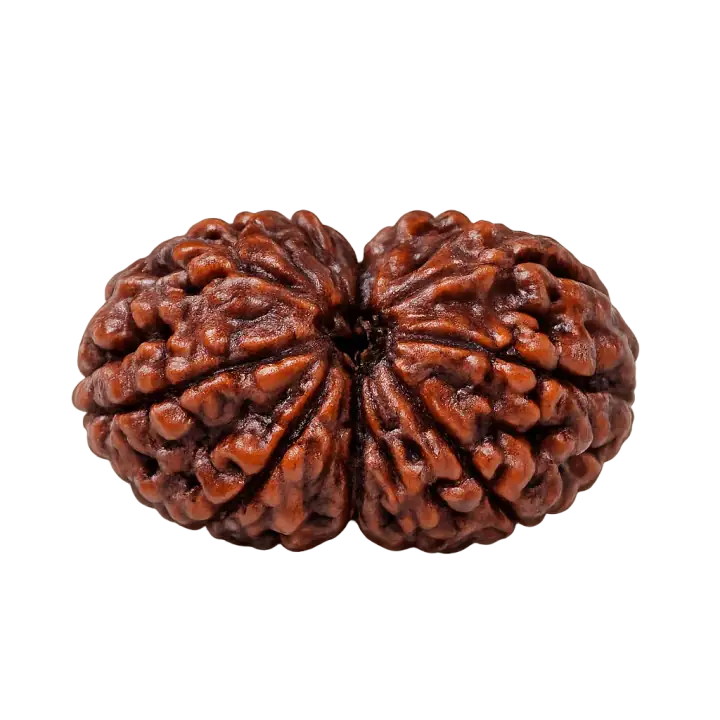
Natural mukhi lines run from the top hole to the bottom, are slightly uneven and sit in the grooves of the bead. Painted or pressed lines tend to look too uniform, shallow or broken.
2. Surface and Texture
A natural bead has a rough, pitted surface with tiny ridges. A surface that is perfectly smooth and shiny all over deserves a closer question to the seller, especially on high-value beads.
3. Ask About Origin and Size
A trustworthy listing states the origin (Nepal or Indonesia), size in mm and Mukhi count for the actual product, not a generic stock photo.
4. Certificates Belong to a Specific Item
For higher-value pieces, ask whether an inspection or lab report comes with that exact bead. A certificate that is not tied to your item says very little.
Do not rely on the “water test”. Whether a bead sinks or floats depends on its density, size and moisture, and imitation beads can be made to behave the same way. Treat it as folklore, not proof.
5. Price and Promises
Rare Mukhis (1, 2, 14 and above) are expensive. If a very rare bead is priced like a common one, or the listing promises health, wealth or relationship results, be careful.
Quick Buyer Checklist
- Real photos of the actual bead or mala
- Origin, size and Mukhi stated clearly
- Item-specific certificate where applicable
- Clear return and shipping policy
- A seller who answers questions without pressure
You can read how we describe every product on our shop, and our shipping and returns policy is public. If you need help judging a piece, contact us before you buy.


